Artificial Intelligence
Tag: Generative AI
Structured outputs with Amazon Nova: A guide for builders
We launched constrained decoding to provide reliability when using tools for structured outputs. Now, tools can be used with Amazon Nova foundation models (FMs) to extract data based on complex schemas, reducing tool use errors by over 95%. In this post, we explore how you can use Amazon Nova FMs for structured output use cases.
AI agents unifying structured and unstructured data: Transforming support analytics and beyond with Amazon Q Plugins
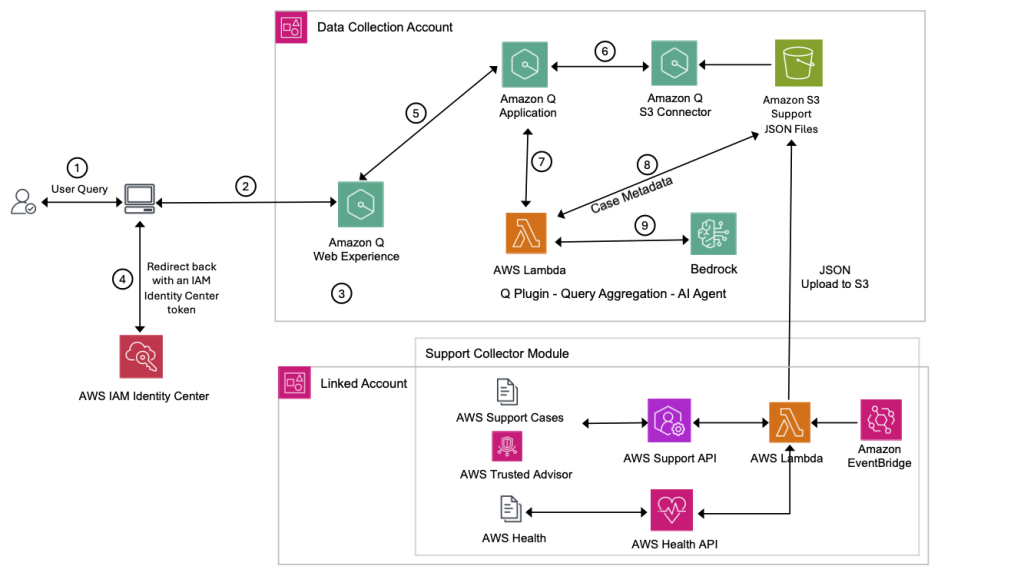
Learn how to enhance Amazon Q with custom plugins to combine semantic search capabilities with precise analytics for AWS Support data. This solution enables more accurate answers to analytical questions by integrating structured data querying with RAG architecture, allowing teams to transform raw support cases and health events into actionable insights. Discover how this enhanced architecture delivers exact numerical analysis while maintaining natural language interactions for improved operational decision-making.
Streamline GitHub workflows with generative AI using Amazon Bedrock and MCP
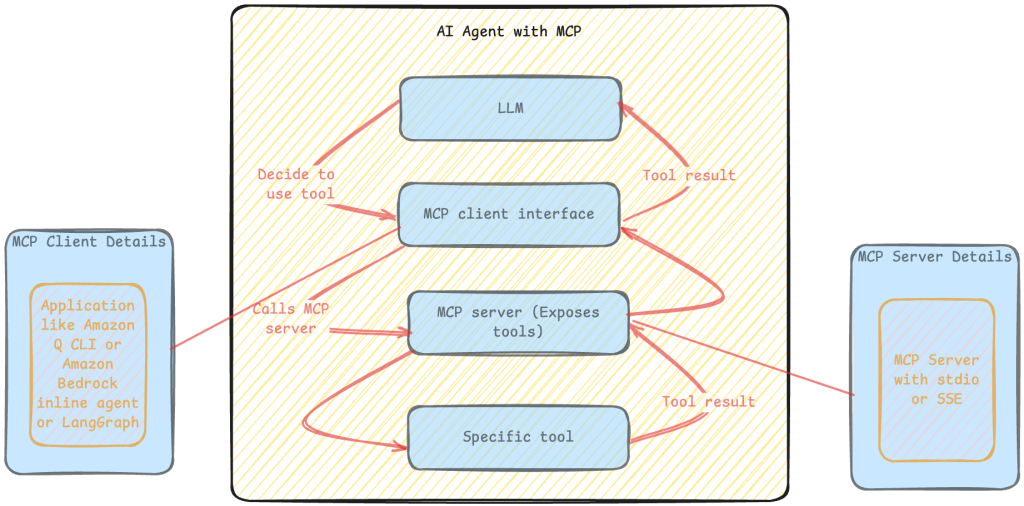
This blog post explores how to create powerful agentic applications using the Amazon Bedrock FMs, LangGraph, and the Model Context Protocol (MCP), with a practical scenario of handling a GitHub workflow of issue analysis, code fixes, and pull request generation.
Benchmarking Amazon Nova: A comprehensive analysis through MT-Bench and Arena-Hard-Auto
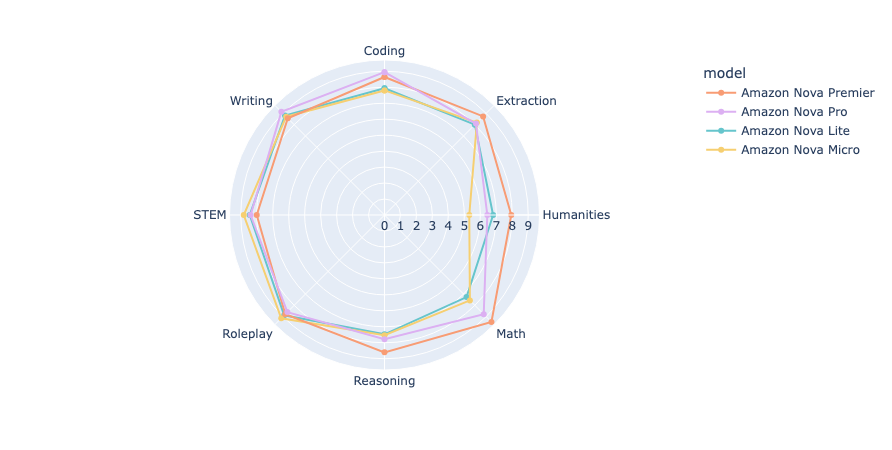
The repositories for MT-Bench and Arena-Hard were originally developed using OpenAI’s GPT API, primarily employing GPT-4 as the judge. Our team has expanded its functionality by integrating it with the Amazon Bedrock API to enable using Anthropic’s Claude Sonnet on Amazon as judge. In this post, we use both MT-Bench and Arena-Hard to benchmark Amazon Nova models by comparing them to other leading LLMs available through Amazon Bedrock.

Use generative AI in Amazon Bedrock for enhanced recommendation generation in equipment maintenance
In the manufacturing world, valuable insights from service reports often remain underutilized in document storage systems. This post explores how Amazon Web Services (AWS) customers can build a solution that automates the digitisation and extraction of crucial information from many reports using generative AI.
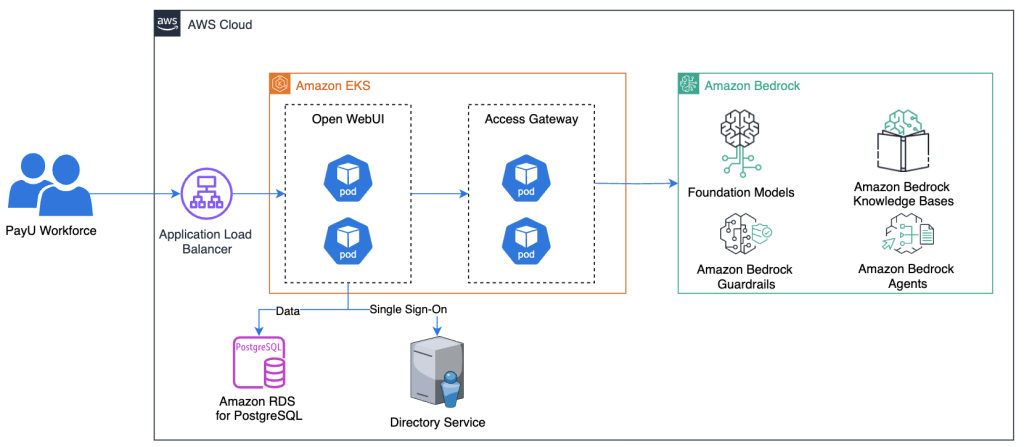
How PayU built a secure enterprise AI assistant using Amazon Bedrock
PayU offers a full-stack digital financial services system that serves the financial needs of merchants, banks, and consumers through technology. In this post, we explain how we equipped the PayU team with an enterprise AI solution and democratized AI access using Amazon Bedrock, without compromising on data residency requirements.

Building intelligent AI voice agents with Pipecat and Amazon Bedrock – Part 2
In Part 1 of this series, you learned how you can use the combination of Amazon Bedrock and Pipecat, an open source framework for voice and multimodal conversational AI agents to build applications with human-like conversational AI. You learned about common use cases of voice agents and the cascaded models approach, where you orchestrate several components to build your voice AI agent. In this post (Part 2), you explore how to use speech-to-speech foundation model, Amazon Nova Sonic, and the benefits of using a unified model.

Improve conversational AI response times for enterprise applications with the Amazon Bedrock streaming API and AWS AppSync
This post demonstrates how integrating an Amazon Bedrock streaming API with AWS AppSync subscriptions significantly enhances AI assistant responsiveness and user satisfaction. By implementing this streaming approach, the global financial services organization reduced initial response times for complex queries by approximately 75%—from 10 seconds to just 2–3 seconds—empowering users to view responses as they’re generated rather than waiting for complete answers.

How INRIX accelerates transportation planning with Amazon Bedrock
INRIX pioneered the use of GPS data from connected vehicles for transportation intelligence. In this post, we partnered with Amazon Web Services (AWS) customer INRIX to demonstrate how Amazon Bedrock can be used to determine the best countermeasures for specific city locations using rich transportation data and how such countermeasures can be automatically visualized in street view images. This approach allows for significant planning acceleration compared to traditional approaches using conceptual drawings.

Choosing the right approach for generative AI-powered structured data retrieval
In this post, we explore five different patterns for implementing LLM-powered structured data query capabilities in AWS, including direct conversational interfaces, BI tool enhancements, and custom text-to-SQL solutions.