Networking & Content Delivery
Tag: Networking & Content Delivery
Trust goes both ways: Amazon CloudFront now supports viewer mTLS
Starting today, Amazon CloudFront supports viewer mTLS authentication from end users to CloudFront, enhancing security for highly distributed and sensitive applications. In modern architectures, securing client-server communication necessitates more than standard TLS, and mTLS extends this model by enforcing bidirectional authentication. This makes sure that both the client and the server verify each other’s identity […]
Network Load Balancers now support Weighted Target Groups
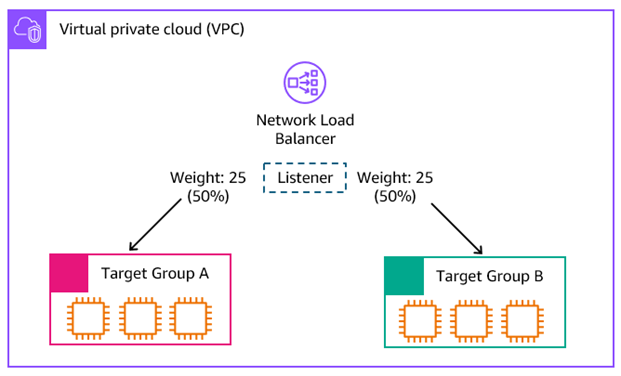
Today Amazon Web Services (AWS) is launching weighted target groups for Network Load Balancers (NLB). This feature allows users to configure static weights among multiple NLB target groups. Weighted target groups enable you to easily perform blue/green or canary deployment strategies with zero downtime and without the need of multiple load balancers. This feature is […]
Custom domain names for VPC Lattice resources
Amazon VPC Lattice is a fully managed application networking service that lets you connect, secure, and monitor communication between your services and resources within and across VPCs and accounts. Today, we announce custom domain names for Lattice resources. In this post, we will examine this feature in detail. Resource owners can now specify an Fully […]
Charting the life of an Amazon CloudFront request
Amazon CloudFront is a native AWS Content Delivery Network (CDN) service. CDNs provide web acceleration by using a worldwide network of edge locations closer to end-users, and caching content at the edge. However, CloudFront can do a lot more than that, with functionality at the edge to do geo-filtering, execute functions, perform AWS Web Application […]

Using generative AI for building AWS networks
In today’s rapidly evolving cloud landscape, network architects, engineers, and cloud teams need to move faster to design, deploy, and manage complex Amazon Web Services (AWS) networking infrastructure at scale. The emergence of generative AI capabilities, particularly Amazon Bedrock and Amazon Q, offers unprecedented opportunities to transform how we approach these challenges and solve them […]
A Lemongrass success story: Enhancing Multi-Region SD-WAN failover with AWS Cloud WAN
Managing multi-Region network connectivity at scale is a critical challenge for modern enterprises. At Lemongrass Consulting, we enhanced our Amazon Web Services (AWS) network architecture by implementing AWS Cloud WAN. This implementation enabled intent-based routing between multiple AWS Regions while providing seamless on-premises integration through SD-WAN in our multi-Region AWS environment. Throughout this transformation, we […]

Building Resilient IPv6 Network with SD-WANs and AWS Cloud WAN Connect with GRE
In this post we explore how you can use AWS Cloud WAN Connect with Generic Routing Encapsulation (GRE) Tunnels and Multi-protocol BGP (MP-BGP) for Equal Cost Multi-Path (ECMP) routing of IPv6 networks. We also cover route verification and failover testing best practices. Many Amazon Web Services (AWS) users are increasingly adopting IPv6 and Software-Defined Wide […]

Network observability for modern applications
In today’s highly distributed and cloud-based IT environments, network monitoring has become crucial for organizations to maintain the health, performance, and security of their applications and infrastructure. However, as modern application architectures evolve, with multiple layers of abstraction and cloud-native services, many teams look for better ways to collect and use the high-quality network data […]

Introducing dual-stack without public IPv4 Application Load Balancer
In May 2024, Amazon Web Services (AWS) launched a new feature for internet-facing Application Load Balancers. This enhancement allows you to provision an internet-facing Application Load Balancer without needing public IPv4 addresses, enabling clients to connect using only IPv6 addresses. To connect, clients resolve the AAAA DNS records assigned to the Application Load Balancer. The […]

How to share IP address ranges across accounts with AWS Global Accelerator
Maintaining ownership of IP addresses while deploying resources in multiple accounts can lead to underutilized IP address ranges. AWS Global Accelerator supports cross-account sharing for bring your own IP addresses (BYOIP), which enables you to share IP address ranges with multiple AWS accounts. After you provision an IP address range with Global Accelerator using BYOIP, […]